
Maximizing Student Engagement: Lessons from Dr. Anita Archer at The Reading League Conference
As I attended The Reading League Conference this week, I was reminded of the tremendous value of actively engaging students in instruction to maximize both participation and learning. This timely reminder came from none other than the queen of explicit instruction herself—Dr. Anita Archer.
The room was buzzing with excitement. Dr. Archer is known for delivering highly engaging presentations that embody the principles of explicit instruction—presentations that build, refine, and extend educator knowledge and skill. Every chair was filled. Every inch of floor space was taken. Let’s just say the fire marshals would not have been pleased.
Dr. Archer shared numerous, easy-to-implement strategies designed to increase student engagement and learning outcomes. These strategies center on three key types of responses: verbal, written, and physical. Let’s dig deeper into each one.
Verbal Responses
When we provide students with opportunities to engage through verbal responses, we permit rehearsal. We permit retrieval. We permit guided practice.
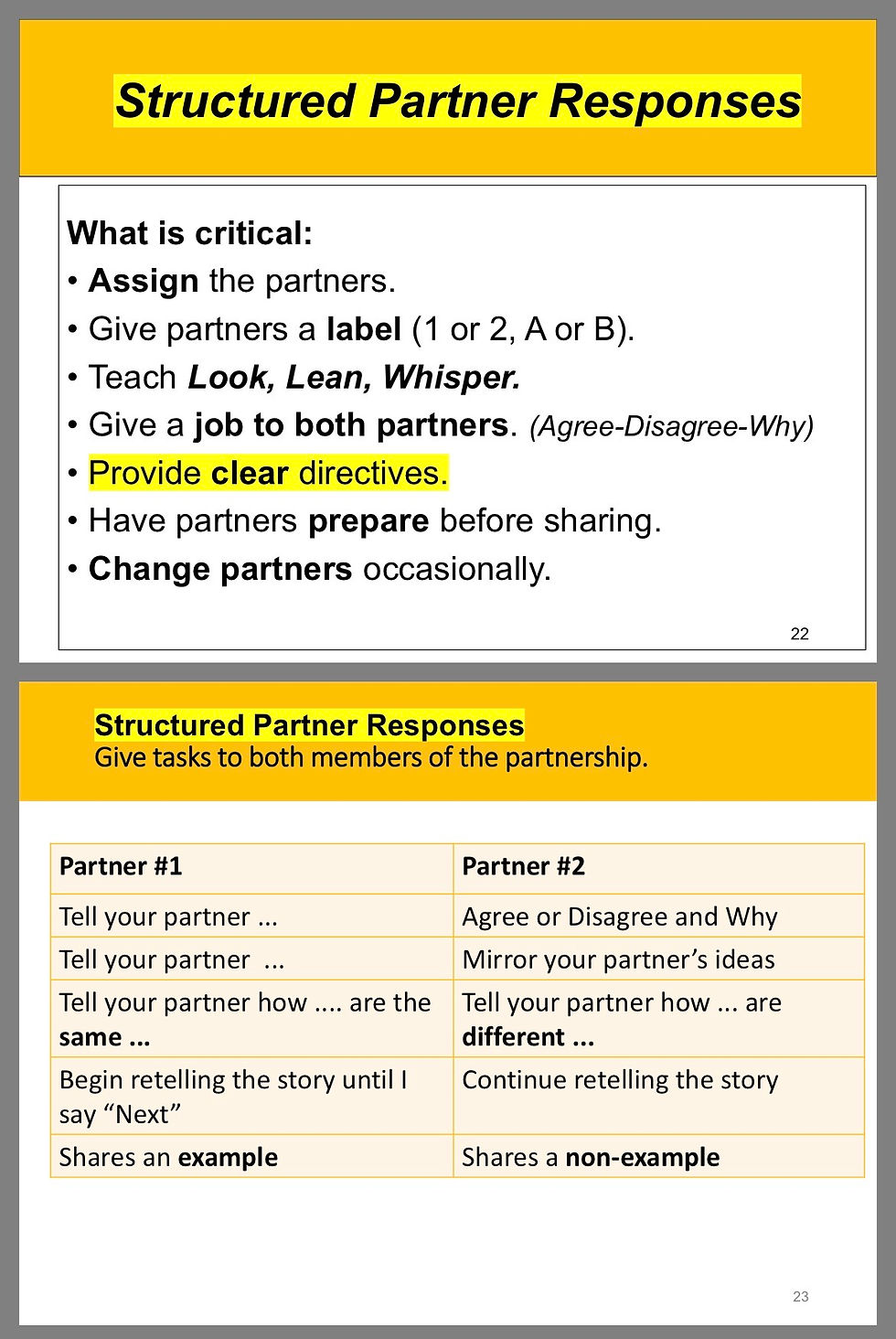
By using strategies such as structured choral responses—where we cue students with appropriate wait time for a unison verbal response—or partner sharing, where we offer sentence frames to support the use of academic language, we give students an active role in their learning.
➡️ For more ideas on verbal engagement strategies that deepen text interaction, refer back to Unlocking Reader Engagement blog from March 2025 https://www.impactfullearningdesigns.com/post/unlocking-reader-engagement-best-instructional-strategies-for-active-text-participation
Written Responses
When we provide students with opportunities to engage through written responses, we permit processing. We permit rehearsal. We permit deeper understanding.
By using strategies like on-demand, short written responses or whiteboard responses, we give students valuable time to process their learning. These approaches also provide formative assessment data—real-time insights we can use to adjust instruction and meet students where they are.
Physical Responses
When we provide students with opportunities to engage through physical responses, we permit engagement. We permit multiple modalities. We permit instructional insight.
By incorporating strategies like gestures, hand signals, or response cards, we collect useful information to inform our instruction while holding all students accountable. These quick checks allow us to monitor understanding and maintain an active, responsive learning environment.
The Research Behind Active Engagement
Research on effective teaching reveals that approximately 70% of responses should be elicited from all students, with only 30% coming from individuals (Haydon et al., 2010; Stevens & Rosenshine, 1981). Furthermore, students should have 3–5 opportunities to respond per minute during instruction.
Yet, in many classrooms, students remain silent and passive for extended periods. To truly increase the effectiveness of our instruction, we must intentionally increase the number of opportunities to respond embedded within every lesson, every minute.
Final Thoughts
As Dr. Archer so powerfully reminded us, active participation drives learning. Increasing student response opportunities—whether verbal, written, or physical—helps transform classrooms into places where every student has a voice, a role, and a path toward mastery.
To close, I’ll leave you with a few of Dr. Anita Archer’s slides, which highlight additional ways to maximize opportunities for student response and ultimately, maximize learning.




Comments